In my recent examination of The Velocity Illusion, I discussed our collective tendency to confuse frantic movement with genuine progress. Having stripped away the performative layer of busyness, we are left with a more uncomfortable, fundamental question (one that often keeps us awake in the quiet hours of a Sunday morning): why, even when we identify that we are travelling in circles, do we find it so difficult to simply stop? The answer, I suspect, lies in the architecture of our own minds—specifically, in what I have come to describe as cognitive inertia.
The Conservation of Effort
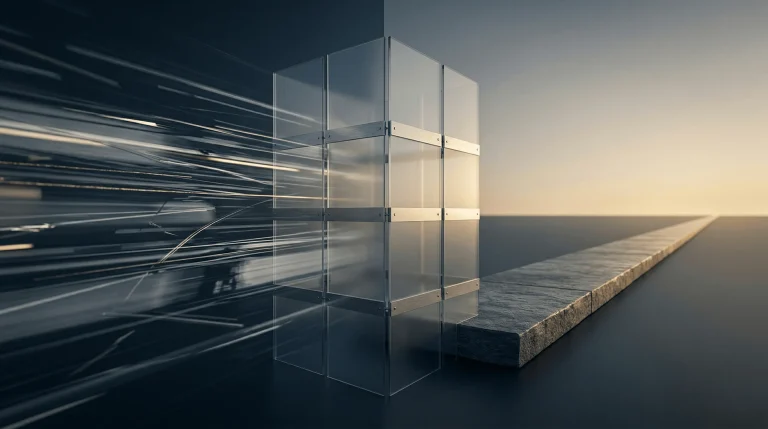
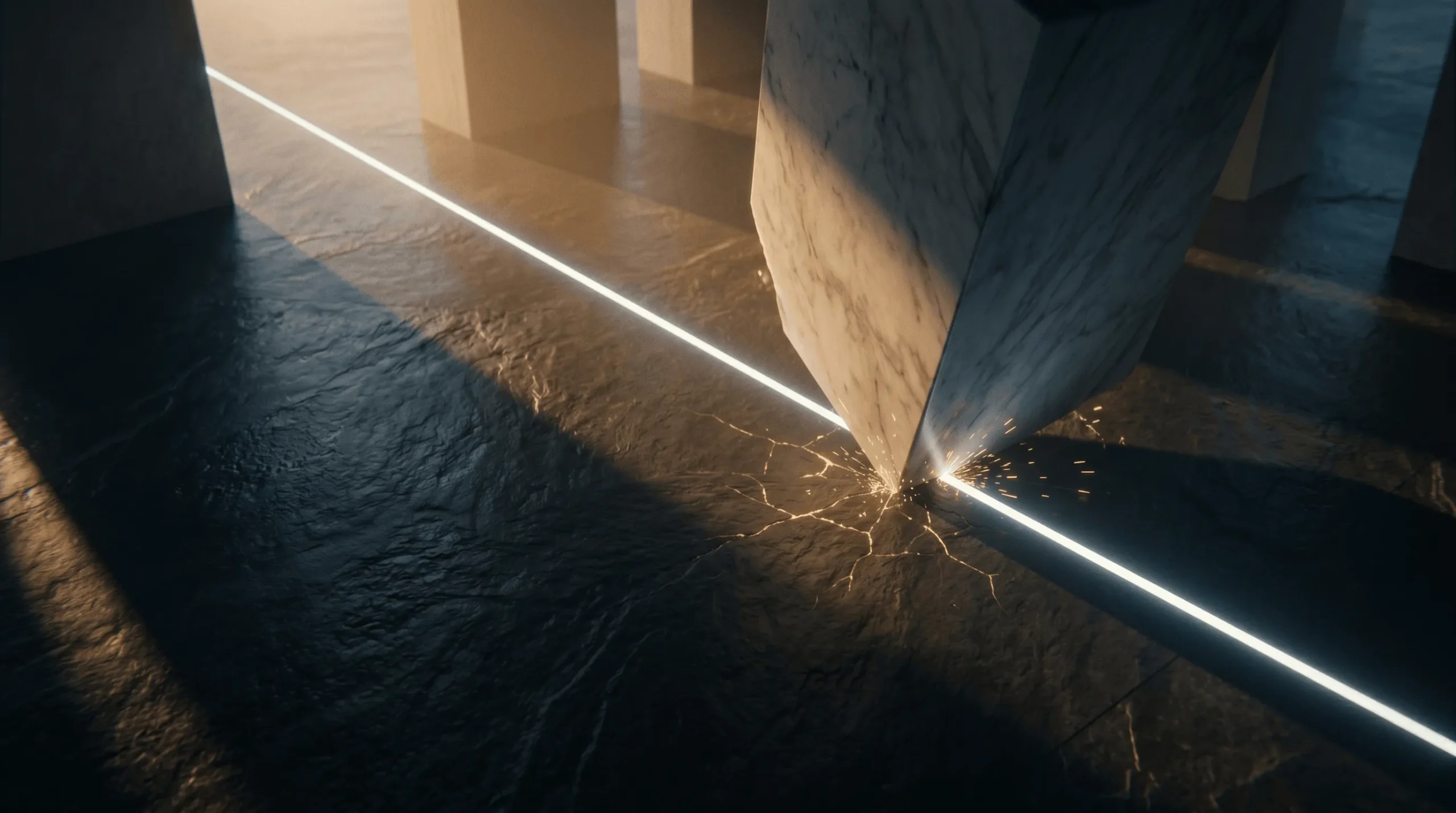
We often operate under the assumption that our intentions are the primary drivers of our actions, yet our neurobiology frequently begs to differ. The human brain is, at its core, a masterpiece of efficiency (or, perhaps, a genius of conservation). It instinctively prefers the well-trodden paths of existing habits—those neural superhighways—to the arduous, calorie-intensive construction of new ones. This is neither a personal failure nor a lack of willpower; it is an efficient physiological safeguard designed to keep us functioning in a low-energy state. When we attempt to change our trajectory, we are essentially trying to redirect a high-speed vehicle on an icy road; the resistance we feel is the sheer weight of the established pattern fighting to maintain its course.
The human brain is, at its core, a masterpiece of efficiency; it instinctively prefers the well-trodden paths of existing habits to the arduous construction of new ones.
For instance, consider the simple act of choosing a nutritious meal over the habitual, greasy convenience of a fast-food alternative. You know which choice serves your long-term vitality, yet you find yourself reaching for the latter simply because your brain has automated that sequence of desire and reward. It is a minor, everyday example, but it perfectly illustrates how our internal wiring often dictates our choices before our conscious “self” (the one we like to believe is in control) has the chance to intervene. This automation is a double-edged sword; it allows us to navigate the world without constant cognitive exhaustion, but it also anchors us to behaviours that no longer serve our evolution.
The Friction of Transition
I have found that acknowledging this internal friction is the first step toward reclaiming our agency. We often misinterpret this resistance as an indicator that we are on the wrong path, or worse, that we lack the discipline to succeed. However, the reality is far more mundane (and, truthfully, more manageable). The difficulty we encounter in the initial phases of transition is merely the “re-entry” phase of our own cognitive development. If we can accept that this inertia is an inherent part of the landscape, we can stop viewing it as a barrier to overcome and start treating it as a variable to navigate.
The difficulty we encounter in the initial phases of transition is merely the re-entry phase of our own cognitive development; it is an inherent part of the landscape to be navigated, not a barrier to be feared.
Take the moment you decide to sit down for a session of deep, focused work. In the first ten minutes, you will inevitably feel the pull of distraction—the urge to check an email, to glance at a notification, or to simply get up for a drink of water (an activity that feels productive but is often just a sophisticated stall tactic). This is not because you are incapable of focus, but because your brain is experiencing a momentary “system error” as it attempts to break the momentum of your standard, reactive day. To move past this, you must be willing to sit with the discomfort of the “slow start,” understanding that the friction you feel is actually the sound of your gears finally engaging.
The Audit of Intentionality
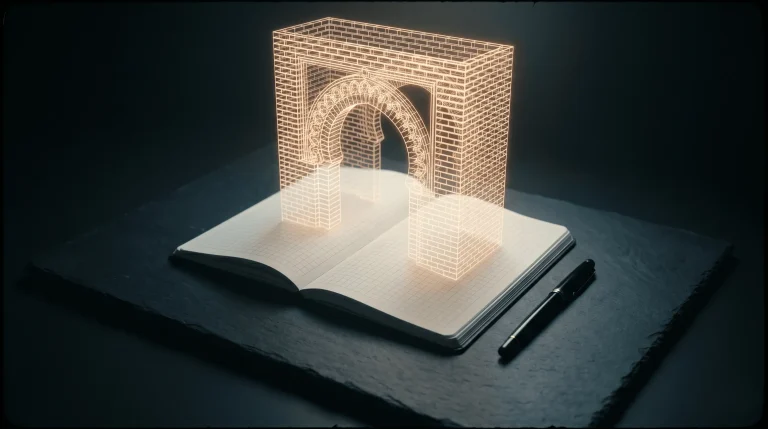
Building a “Lattice” for our activities requires us to introduce intentional friction into our decision-making. If we are constantly moving, we never have to face the quiet, potentially jarring realisation that our movement is decoupled from our direction. To break the cycle of cognitive inertia, we must be willing to embrace the “Quiet Interval”—that temporary, often uncomfortable state where we have slowed down enough to hear our own thoughts, yet have not yet gained the momentum to build something new.
We must learn to distinguish between the movement that is merely a defence mechanism against the silence and the momentum that is a product of mass and intentionality. By stripping away the performative layers of our “hustle,” we reveal the essential core of our intentions. I am increasingly convinced that the depth of our work is directly proportional to our willingness to endure the silence that precedes it.
True progress requires momentum, which is the product of mass and velocity; in the context of a balanced life, this mass is our intentionality—the weight of our values and the clarity of our purpose.
Embracing the Quiet Interval
It is in this silence that character is truly forged, not in the shouting of goals to an audience, but in the grit required to stay still until we are ready to move with purpose. The goal is not to be the fastest person on a road that leads nowhere, but to have the discipline to ensure our velocity is actually serving our destination. This requires a ruthless audit of our daily routines to identify where we are merely “filling the space” to avoid the weight of intentionality.
Progress, when stripped of its aesthetic, is often quiet, steady, and occasionally invisible to the casual observer. The most profound breakthroughs do not happen during the frantic sprint; they occur when you possess the presence of mind to ensure your direction is aligned with your values. You must be willing to tolerate the lack of immediate feedback, the absence of public applause, and the subtle, lingering discomfort of growth. By doing so, you move beyond the hollow satisfaction of merely “being busy” and into the transformative power of being effective, ensuring that every step you take is a deliberate act of architectural construction rather than a frantic scramble in the dark.