

Navigating the Late-January “Ebb”
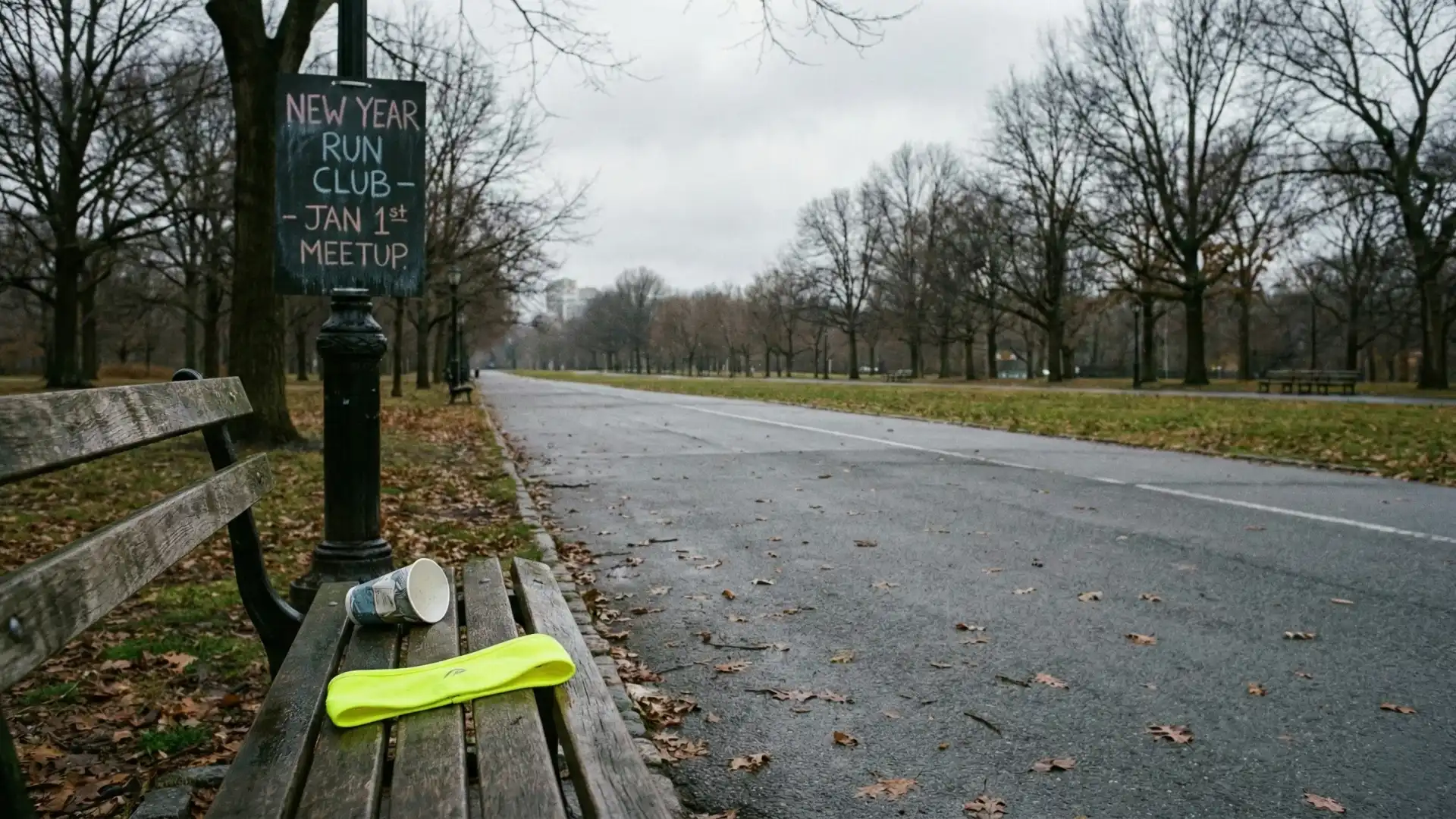
I was observing the local landscape recently—specifically those communal spaces that, only a fortnight ago, were teeming with “New Year, New Me” enthusiasts (identifiable by their pristine, neon-coloured running gear and an almost palpable look of grim determination). Today? Those same spaces are blissfully, perhaps tellingly, vacant. It appears the “January 1st momentum” has finally met its formidable match: the mundane, unvarnished reality of a standard Tuesday morning.
It has been exactly three weeks since the world collectively engaged in that peculiar, albeit well-intentioned, ritual of the “Fresh Start.” By now, the initial fervour of the new calendar year has likely undergone a significant (and entirely predictable) attenuation. If you find that your grand designs for 2026 have begun to lose their lustre, or perhaps have been unceremoniously discarded alongside the holiday décor, I invite you to pause. You are not witnessing a fundamental failure of character; you are simply observing the natural expiration of “temporal intoxication.”
The Myth of the Magical Threshold
We often treat the first day of the year as a magical threshold—as if the Gregorian calendar possessed the inherent power to spontaneously transmute our deepest insecurities into iron-clad habits (a notion that is as charming as it is statistically improbable). This collective delusion suggests that the mere ticking of a clock can override years of established cognitive patterns and physiological inclinations.
However, as the novelty of the new digit on our correspondence fades, the cold reality of our existing psychological architecture—that complex, often stubborn, internal scaffolding—begins to reassert itself. We discover, often with a sense of quiet dismay, that the “New Version” of ourselves we envisioned at midnight on December 31st is still tethered to the same limitations we possessed at 11:59 PM.
“The ‘start’ is merely a moment, but the ‘re-start’—that persistent, gritty, and deeply rewarding act of returning to one’s centre—is the true hallmark of a life in flux.”
It is at this precise juncture, when the “newness” evaporates and the adrenaline of the resolution dissipates, that the genuine work of personal growth actually commences. When the applause of the New Year’s countdown has ceased, and you are left alone with your habits in the grey light of a mid-winter morning, you finally discover which intentions were rooted in substance and which were merely casualties of a seasonal trend. To find oneself “off-track” in late January is not a crisis; it is a vital diagnostic opportunity to see what truly resonates with your actual life, rather than your aspirational one.
The Psychology of the Three-Week Fade
Why does the third week of January feel like a universal graveyard for ambitions? There is a biological component to this “recessional.” The human brain is remarkably efficient at conserving energy; it prefers the well-trodden paths of old habits (those neural superhighways) to the arduous construction of new ones. By the twenty-first day, the sheer effort required to maintain a new behaviour begins to weigh heavily against the comfort of the familiar.
Furthermore, we often fall victim to the “All-or-Nothing” fallacy. We believe that if our performance isn’t flawless, it is worthless. We view a single missed day or a momentary lapse in judgment as a total breach of contract with our “New Self.” This binary thinking is the primary architect of the January slump. We allow a minor deviation to balloon into a total abandonment, mistaking a temporary ebb for a permanent failure.
The Ruthless Audit of Intentions
Perhaps the goals you set twenty-one days ago were far too cumbersome—a collection of “Shoulds” rather than “Musts.” Now is the time to conduct a ruthless yet compassionate audit. To move forward effectively, we must strip away the performative and embrace the essential.
- Identify the “Dead Weight”: Reflect on which resolutions you have been avoiding. Are you avoiding them because they are difficult, or because they lack personal meaning? Often, we adopt goals because they look good on paper or satisfy external expectations, rather than because they align with our internal values.
- The Principle of Elegant Reduction: If your list of resolutions was ten items long, it was likely destined for failure. What is the one pursuit that actually moves the needle for your well-being and productivity? By narrowing our focus, we increase our intensity.
- The Micro-Habit Pivot: Can you shrink your ambition until it is impossible to fail? If an hour of deep work proved too daunting, can you commit to fifteen minutes of uninterrupted focus? If a complete dietary overhaul felt like a punishment, can you focus solely on one nutritious choice per day?
“It is far better to pursue one meaningful, disciplined micro-habit with unwavering consistency than to collapse under the weight of a dozen grandiose fantasies.”
By stripping away the superficial layers of our resolutions, we reveal the essential core of our intentions. This is not an act of “giving up”; it is an exercise in strategic refinement. It is the acknowledgement that a sustainable path is infinitely more valuable than a spectacular, but short-lived, sprint.
Observing the “Quiet Interval”
Do not be discouraged by the quieted halls of the gym or the sudden abundance of half-empty journals. Instead, embrace this “Quiet Interval” as the moment you transition from the performative energy of the New Year to the substantive practice of living. This is where the character is built—not in the shouting of goals to an audience, but in the quiet persistence of maintaining them when the world has stopped paying attention.
We must learn to distinguish between movement and progress. January is often full of movement—hectic, loud, and visible. February and March are where progress happens (or at least begins to happen)—quiet, steady, and often invisible to the casual observer. The “re-entry” is the most difficult part of any voyage, but it is also the part that brings you home.
Final Thoughts: The Art of the Perpetual Return
The calendar is, after all, a tool for measurement, not a master of your worth. It provides a framework for our lives, but it should never be a cage for our spirits. True discipline is found in the quiet, unrecorded moments when you decide to try again—not because it is January, but because it is necessary for your evolution.
As we move deeper into the first quarter of the year, let us trade the loud, unsustainable burst of the “start” for the quiet, enduring power of the pivot. If you have stumbled (doesn’t matter by how much), acknowledge the friction without judgment, adjust your stride with grace, and proceed. The most beautiful thing about a life in motion is that every moment offers a fresh opportunity for an elegant recalibration.